SBIR/STTR Programs Are Finally Reauthorized!

SBIR/STTR Programs Are Finally Reauthorized!

On April 13, 2026 President Trump signed into law the Small Business Innovation and Economic Security Act. Unlike other reauthorizations which typically last for three years, this extends both programs and associated pilot programs for 5 years until September 30, 2031. Associated pilot programs include the Phase 0 Pilot Program, the Commercialization Readiness Programs, and others.

Although everyone can express a sigh of relief, it is important to keep in mind that it will take time to re-establish a timeline for the release of new solicitations across all of the participating agencies.  It is anticipated that the Department of War and the National Aeronautics and Space Administration will be among the first to release new solicitations. However, for those agencies which have experienced considerable change in their mission and/or staffing, it may take several months to release new solicitations.

Meantime, companies are encouraged to learn about the positive impact of new additions which reauthorization introduces including (1) Strategic Breakthrough Awards by which larger agencies can provide companies up to $30M post Phase II funding over a four year period, assuming companies have outside matching funds, (2) the requirement of Technical and Business Assistance (TABA) to be provided by all agencies and which will allow company staff, as well as external consultants to conduct TABA activities. In addition, I-Corps training can be paid for using TABA funds; and (3) a new emphasis on Phase III awards for companies working with contracting agencies.

Other changes with which small businesses should become familiar are Foreign Influence disclosures and annual proposal limits, which will vary by Agency.

Open Letter to the House and Senate Small Business Committees

Open Letter to the House & Senate Small Business Committees

Reauthorization of the SBIR/STTR Programs

The SBIR/STTR small business community is in pain!  Some companies have already passed away; others are at death’s door. While Congress continues to delay reauthorization of the Small Business Innovation Research (SBIR) and Small Business Technology Transfer (STTR) programs[i], the advanced technology community continues to agonize.

For decades there has been a reliable rhythm to the SBIR/STTR programs: a time when agencies released their Phase I and Phase II solicitations; a time when notification of awards was made. Mandated by Congress, agencies have been expected to notify companies of award within 90 days of the stated proposal submission dates[ii]. This rhythm is gone; there is no predictability; there are no notifications; only questions and delays.

Some of this has nothing to do with reauthorization, but with the changes in Agency missions. It takes time to change organizations, to secure new staff as others depart and to decide upon topics that align with new directions. These changes began in January 2025 and still little information is forthcoming. Some companies are waiting to hear if proposals submitted in February have been awarded. Others are waiting to hear when Phase II solicitations originally scheduled for release in early FY26 will actually be released.

Delays and uncertainties have many companies living on a razor’s edge. In order to reduce technical risk, Phase II funding is required to achieve Technology Readiness Level (TRL) 6 or higher. Without reducing technical risk, investments and partnerships won’t happen…and while waiting, some companies will collapse as there is a limit to how much personal financial risk founders can absorb.

Failure to reauthorize the SBIR/STTR programs will be the nail in the coffin for an increasing number of small businesses! Without reauthorization, delays will continue.  It will take years for the participating agencies to once again establish a rhythm for their programs and for small business to regain their footing. House bill H.R. 3169, officially titled the “SBIR/STTR Reauthorization Act of 2025” reflects a true understanding of the SBIR/STTR community and the challenges that they face in commercialization. However, reauthorization is delayed due to the desire to include a number of items originally in the INNOVATE Act (Senate bill, S.853).

One of the items being debated is the introduction of Phase 1a. However, Phase 1a does not acknowledge the fact that agencies such as the Department of Energy through its Phase 0 program and the National Institutes of Health through its Applicant Assistance program have been providing effective proposal preparation services for new companies for many years using funds allocated for Agency Outreach. Implementation of Phase 1a would eliminate funding for these existing and effective programs which are offered at a quarter of the proposed cost for Phase 1a. In addition, agencies such as the National Science Foundation have since 2019 taken extra steps to help new companies through the addition of a Project Pitch mechanism, as well as their outreach initiatives. Thus, participating SBIR agencies have shown they are capable of innovative enhancements to their programs. They do not need Congress tying up re-authorization with its own additions.

The 119th United States Congress is on track for becoming the most anti-small business Congress on record. To dismiss this legacy, to enable the agencies to do their job and America’s small, advanced technology community to survive, Congress should immediately re-authorize the SBIR/STTR programs for one year. Permanent authorization should follow.

[i] For a brief introduction to the history and purpose of the SBIR/STTR program, please consult “The History of the SBIR and STTR programs,”

[ii] See the 2022 Annual Report to Congress, pages 55 and 57 for more information regarding the number of days between solicitation close and award notification by agency.

Email
Twitter
LinkedIn

Federal Agencies Also Suffer Without SBIR/STTR Reauthorization

Federal Agencies Also Suffer Without SBIR/STTR Reauthorization

By Jenny C. Servo, Ph.D.

The failure of Congress to reauthorize the Small Business Innovation Research (SBIR) and the Small Business Technology Transfer (STTR) programs has brought these initiatives to a complete standstill. This adversely affects, not only the small, advanced technology firms, but also the federal agencies which utilize these programs as a resource for needed innovations.

Historically, the Department of Defense (DoD), the Department of Homeland Security (DHS) and the Department of Energy (DOE) release a Phase I Pre-solicitation or solicitation during the first quarter of the Fiscal Year (October 1 – December 31, 2025). These solicitations are currently at risk due to failure to reauthorize the SBIR/STTR programs now, as these programs lapsed on October 1, 2025. Although DoD has multiple Phase I solicitations during the fiscal year, DHS has only one during the first quarter, and DOE has two, neither of which has yet been released. This is a hardship for small businesses that are counting on the opportunity to compete for an SBIR/STTR award from these important programs.

What many Congressional staff don’t understand is that the eleven federal agencies also depend on the SBIR/STTR programs to advance their innovations. This is accomplished through the needs articulated in the solicitations which the agencies themselves prepare. Having access to a ready bastion of small, advanced technology firms that can address national needs is important to the federal agencies and for maintaining U.S. competitiveness. To put this in perspective, in the 1980’s General Abrahamson, the first director of the Strategic Defense Initiative (SDI) Organization is quoted as stating that SDI would require approximately 200 innovations to accomplish its mission. It is often stated that the need for such innovation was a factor that led President Reagan to endorse the Small Business Development Act in 1982. Today, the United States’ federal innovation ecosystem still relies heavily on the nation’s small businesses to address agency needs.

In part, reauthorization is stymied because of two issues (1) the first, relates to opinions regarding frequent, award winners, and (2) the second, the venture capital model. Those that oppose the ability of companies to win frequent awards, assume that these “mills”, prevent new entrants from winning SBIR/STTR awards. However, those making this claim, do not ask to see the agency data on proposals from new applicants to determine if they are competitive. Frequent award winners, win large numbers of awards because of their strengths in realizing technological innovations. Their success is based on merit and the fact that they have demonstrated to their agency customers that they can reliably provide them with innovative solutions in a timely fashion. Just as it would seem foolish to tell Lockheed Martin, you can’t win another award, because you have received too many – it does not make sense to take this stance, with innovative small businesses which have demonstrated their competence.  Ultimately most of these firms, leave the SBIR program through an acquisition.

The second issue holding up SBIR/STTR reauthorization appears to be the desire to insert the venture capital model into this program. However, the beauty of the SBIR/STTR programs is that they attract talented scientists and engineers who are willing to take a personal risk to start their own business. By contrast, venture capital firms wait until technological and management risk are reduced before investing and as the market is beginning to rapidly grow. Venture capital is an option that businesses consider as they mature. However, to meet the objectives of federal agencies, the SBIR/STTR programs should remain funded by the federal agencies which determine their needs, make award decisions based on merit and do not take any equity in the small business.

To address well, the changes in emphasis that every federal agency is experiencing today, the SBIR/STTR programs must be reauthorized immediately, so that federal agencies can proceed with articulating these priorities in solicitations and so that the infrastructure that has been developed to conduct these programs to benefit the U.S. economy can proceed.

Time is of the essence. Congress needs to reauthorize the Small Business Innovation Research (SBIR) and Small Business Technology Transfer programs immediately!

Jenny C. Servo, Ph.D. is the President and Founder of Dawnbreaker, a woman-owned small business located in Rochester, NY which has provided commercialization assistance to SBIR/STTR awardees since 1990.

Email
Twitter
LinkedIn

OTAs Boost DOD’s Ability to Acquire nnovative technologies

The Department of Defense (DOD), also known as the Department of War (DOW), is increasingly using Other Transaction Agreements (OTAs or OTs) as a mechanism for research, development, test & evaluation (RDT&E) and initial production activities. DOD’s OTA spending went from under $1 billion in FY 2015 to $18 billion in FY 2024. Issued in April 2025, Executive Order 14265: Modernizing Defense Acquisitions and Spurring Innovation in the Defense Industrial Base, directs DOD to make a number of acquisitions reforms focused on improving speed and flexibility, including prioritizing OTAs and similar vehicles.

OTAs are meant to boost DOD’s ability to acquire innovative technologies, especially from nontraditional defense contractors and small businesses. OTAs, not subject to certain federal acquisition laws and requirements, are more agile contracting vehicles with more flexibility in the award process and contract terms and conditions. There are three types of OTAs: research OTAs, prototype OTAs, and follow-on production OTAs. Most are prototype OTAs, which offer a streamlined method for transitioning into production without further competition. All branches of DOD can use OTAs -. The Army has made the most use of OTAs by far, followed by the Air Force. (Some other federal agencies, such as NSF, have similar other transaction agreement authority.)

DOD can award OTAs to individual organizations (for-profit or non-profit) or to consortia—groups of organizations focused on specific technology areas. The majority are awarded through consortia. DOD awards consortia OTAs and directs the consortia to handle different aspects of the awards process for individual projects. An organization must be a member of the consortium to be eligible for project awards through that consortium. Examples of major DOD consortia include:

Download our OTA Report!

Fill out the form to download a copy of our Other Transaction Agreements (OTA) report.

*By submitting this form you agree to receive updates from Dawnbreaker.

Market Snapshot: Algal Production Systems & Aquaculture

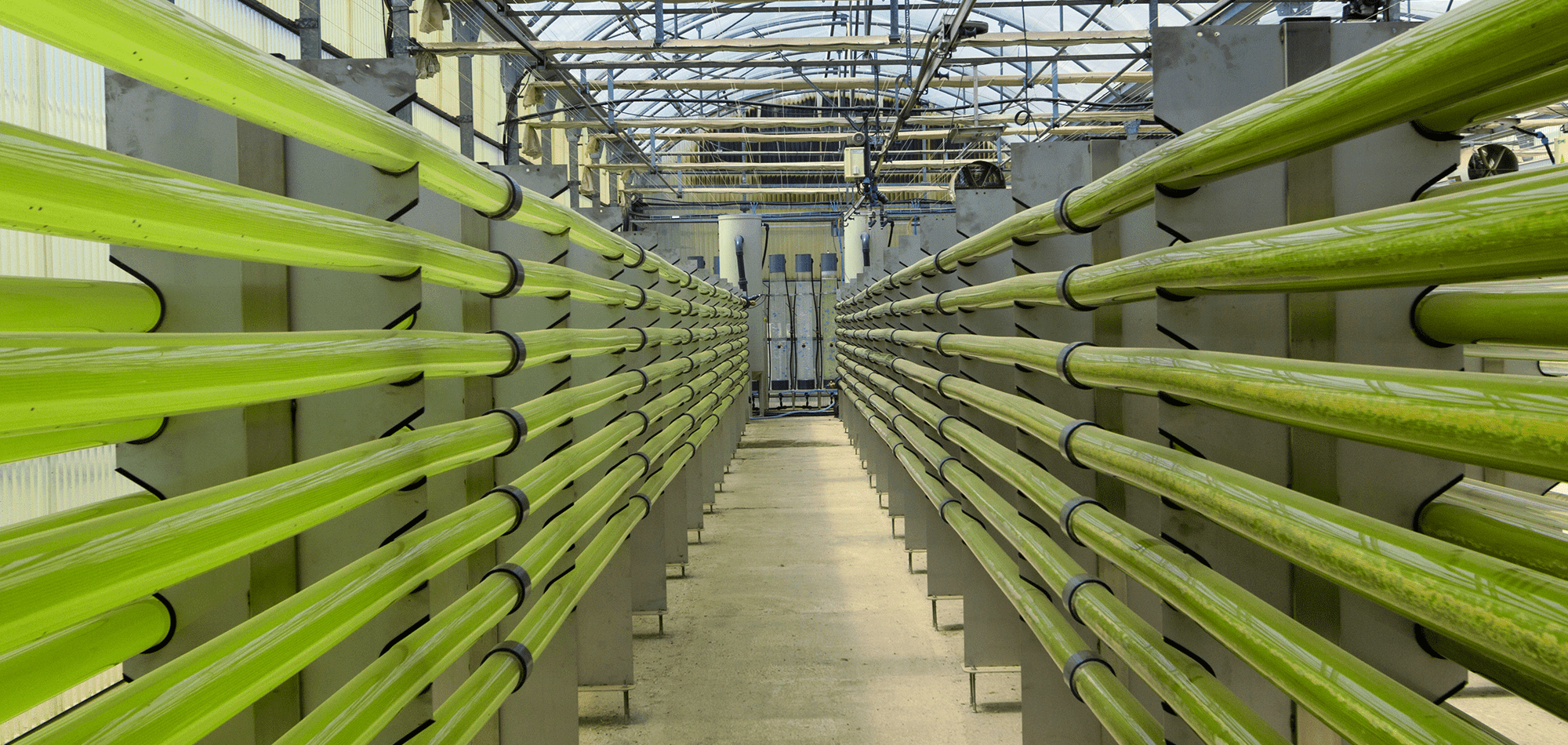
Algae encompass a diverse group of organisms, including both macroalgae, such as kelp and nori, and microalgae, like spirulina and chlorella. Over 50,000 species of algae have been identified world-wide. All types of algae possess chlorophyll and play a crucial role in aquatic ecosystems, serving as the primary source of energy for aquatic organisms. The U.S. government has exhibited an interest in using algae for both nutrition/animal feed applications and for biofuels/bioproducts. In its most recent solicitation, the U.S. Department of Agriculture (USDA) sought novel or innovative approaches for algal production systems to improve quality, development, and harvesting of algal biomass for use in aquaculture feed and human food. The main cultivation systems widely used for algae cultivation are open ponds, attached growth systems, and closed photobioreactors (PBRs). 

The aquaculture industry has demonstrated a growing interest in cultivating microalgae because of its rapid growth and high lipids content. Algae products like lipids (omega-3, omega-6, and omega-9), carotenoids, carrageenan, agar, algal protein, algal flour, and alginate can be extracted from algae to serve various end-use applications. Applications in the algae products market include food & beverages, nutraceuticals & dietary supplements, animal feed, pharmaceuticals, personal care products, and other applications.

The algae-based animal feed market is one part of the algae products market. The algae-based animal feed market is expected to grow to $6.6 billion by 2034 from the 2024 valuation of $4.5 billion, exhibiting a CAGR of 3.9%. This market includes microalgae and macroalgae for both animal feed and aquaculture feed products. The use of algae in animal and fish feed is becoming increasingly popular. By type and source, aquaculture and microalgae hold the dominant share of the market respectively. Over half of the fish on the market are raised in fish farms, where fish feed constitutes around 90% of the cost. Most of the fish feed currently used is derived from either wild fish or terrestrial agricultural products. Both sources present problems in sourcing. Microalgae biomass, on the other hand, has the potential to support sustainable aquaculture and a circular economy as an environmentally-friendly feed ingredient. However, the high cost of microalgae  production remains a barrier to aquaculture.

While algal biomass cultivation has significant market potential, especially as seen for fish feed, the USDA is searching for improved production systems. The main cultivation systems—open ponds, attached growth systems[1], and photobioreactors (PBRs)—have their own shortcomings and challenges. General barriers for mass cultivation include financial challenges (the cost of water and nutrients) the limitations on recycling, biomass loss due to biocontamination and pond crashes, as well as the energy costs associated with harvesting. While open ponds have lower capital costs, they yield lower overall production rates. A major challenge of open ponds is the sensitivity to pollutants. Thus, only a few species can be cultivated in these ponds for biomass production on a commercial scale. Another concern is the problem of evaporation in open systems, which require water replacement to maintain the optimum balance of suspended salts and water.

Enclosed photobioreactors offer several advantages over open systems, which include larger surface-to-volume ratio, reduced risk of contamination, smaller area requirements, and the ability to prevent evaporation. Vertical-column and tubular photobioreactors designs are the most used. However, photobioreactors are more costly: the construction and maintenance are ten times higher than open ponds. While photobioreactors can maintain higher biomass density, the significant cost difference makes photobioreactors uncompetitive for industrial-scale production of microalgae biomass. As a result, closed system photobioreactors are mainly used for higher value products. The development of new technologies, such as closed-loop photobioreactors and precision fermentation, are improving the cost effectiveness of algae biomass production. Such advances seek to address the concerns related to high production costs, but microalgae harvesting remains a challenge for commercial-scale biomass production.

Improved algal production systems would benefit various markets and industries beyond aquaculture, including biofuels/bioproducts, pharmaceuticals, and wastewater treatment. The U.S. Department of Energy’s (DOE) Bioenergy Technologies Office (BETO) has an Advanced Algal Systems program, which supports research and development (R&D) to lower the costs of producing algal biofuels and bioproducts. The Algae Biomass Organization (ABO) explains how algae-based systems have the opportunity to provide a sustainable solution to wastewater treatment, identifying Iowa-based Gross-Wen Technologies’ patented solution Revolving Algal Biofilm (RAB) treatment system, which utilizes an algae biofilm to treat wastewater.

[1] Open ponds and photobioreactors are the two systems predominantly used for algae growth related to animal and fish feed. Attached growth systems relate to algal biomass production for biofuel and wastewater treatment.

Market Snapshot: Coal-Based Carbon Fiber

Acceleration of coal technology – including production of coal-based carbon fiber – is an area of interest under the current presidential administration. This is signaled by President Trump’s Executive Order “Reinvigorating America’s Beautiful Clean Coal Industry” (April 2025), which highlights coal-based carbon fiber as a research and development area alongside other high-performance, high-value coal-to-carbon products like coal-derived graphite. It is also implied by the energy and water development appropriations bill passed by the House in early September 2025, which proposes $688 million for DOE’s Office of Fossil Energy and Carbon Management (FECM) or Office of Fossil Energy (FE). Alongside critical minerals and materials technology, coal and carbon utilization is a focus for FE under its Minerals Sustainability program.

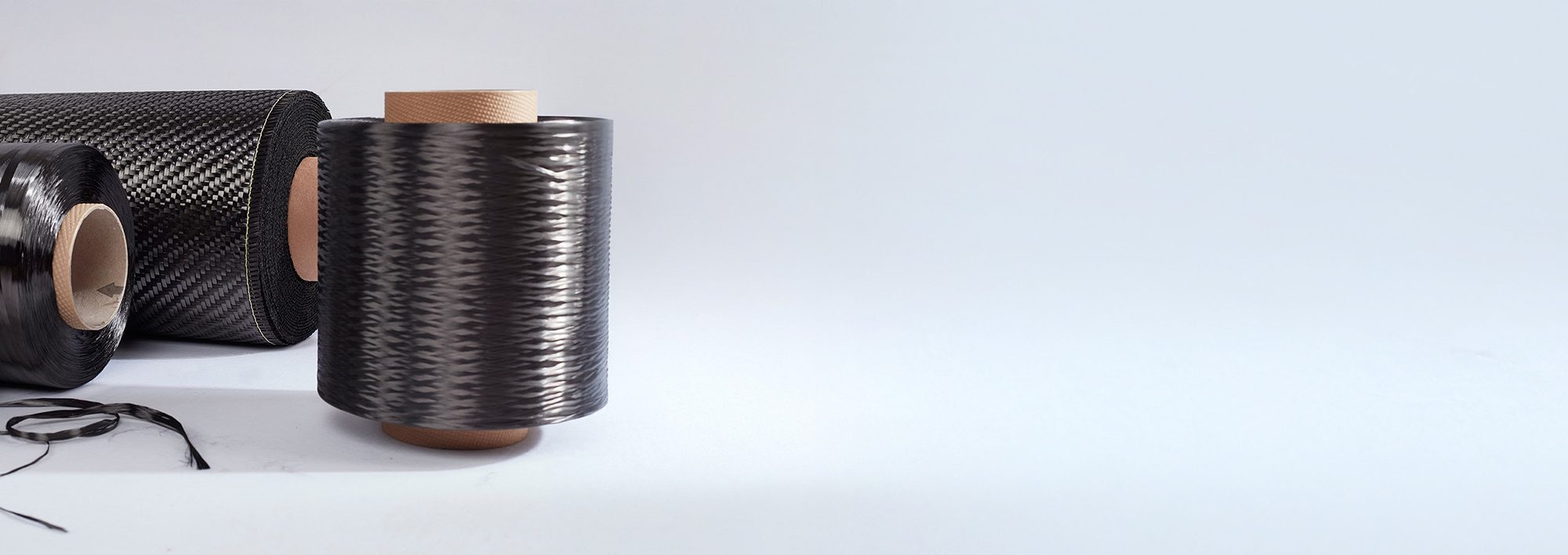
The global carbon fiber market is expected to grow at a CAGR of 7.2% over the next five years, from $4.82 billion USD in 2025 to $6.82 billion in 2030, according to MarketsandMarkets. Widespread adoption of carbon fiber in the aerospace, defense, and wind energy industries continues to drive growth, as does increasing demand for lightweight, high-strength materials in the automotive, sporting goods, and construction industries. Most carbon fiber – about 90-95% – is made from polyacrylonitrile (PAN), a synthetic organic polymer resin also widely used to make acrylic fabrics. Pitch-based carbon fiber, made from petroleum or coal tar, accounts for about 4-5% of the overall carbon fiber market by value in 2025, . Coal tar pitch is obtained by distilling coal tar, a byproduct of coal coking, primarily carried out in steelmaking.

While today’s market for pitch-based carbon fibers (CFs) is relatively small, pitch-based CFs are attractive because they can offer higher rigidity and electrical and thermal conductivity than PAN-based CFs. They also offer higher carbon yield using cheaper precursors, so they have the potential to be cheaper, although PAN-based CF’s more mature manufacturing techniques can mean it is cheaper to produce at scale. Compared to petroleum pitch-based CF, coal-based CF is generally lower in tensile strength but also has a lower precursor cost, higher carbon yield, higher electrical and thermal conductivity, and is simpler to manufacture. Challenges remain, however, before coal-based CF can be produced cost-competitively at scale. Natural impurities in coal greatly affect the attributes of the resulting CF, and manufacturing improvements are needed to address variability in the source coal and pitch composition and determine processing control requirements. (For more information, see DOE publications on coal-based CF on OSTI.gov.)

Given the abundance and relatively low cost of coal in the U.S., Giraud-Carrier and Barlow (2022) point out that coal tar pitch is a carbon fiber precursor candidate that could reduce reliance on foreign suppliers while helping coal-producing communities continue to cope with the decline in domestic consumption of coal as fuel. Carbon fiber can even be produced from waste coal, left over from ongoing and legacy coal processing. The University of Kentucky Center for Applied Energy Research (CAER) announced the development of such a method in 2023 under the $10 million C4WARD: Coal Conversion for Carbon Fibers and Composites project, in collaboration with DOE FE and the Oak Ridge National Laboratory and its Carbon Fiber Technology Facility.

Top global manufacturers of carbon fiber in general include Hexcel Corp. (U.S.), Mitsubishi Chemical Group Corp. (Japan), Teijin Ltd. (Japan), Toray Industries Inc. (Japan), and Zhongfu Shenying Carbon Fiber Co. Ltd. (China). For coal tar pitch-based carbon fiber specifically, there are a handful of key, vertically integrated players, including Mitsubishi Chemical Group Corp. (Japan), Nippon Graphite Fiber Corp. (Japan) – an affiliate of Nippon Steel Chemical & Material (Japan), and Osaka Gas Chemical Co. Ltd. (Japan). Mitsubishi Chemical’s DIALEAD, Nippon Graphite’s GRANOC, and Osaka Gas Chemical’s DONACARBO are coal tar pitch-based carbon fibers used for aerospace, sports, and industrial applications, among others.

To learn more about innovations in coal-based carbon fiber and other coal-to-carbon technologies, consider checking out the American Carbon Society’s Carbon 2026 Conference, to be held July 12-17, 2026 in Charleston, SC.

Market Snapshot: In-Space Manufacturing

In-space manufacturing (ISM) encompasses the production and assembly of goods in space, beyond the earth’s atmosphere, to create products such  as artificial retinas, tissues, structures and parts, advanced materials, semiconductors and many others. As space exploration ventures further from Earth, the logistical challenges and associated costs associated with resupply missions and repairs become increasingly cost prohibitive. By reducing reliance on Earth-based supply chains, ISM could enhance the flexibility of future space missions. In this article, we provide a snapshot of the  status ISM and identify funding opportunities that small businesses can consider as they pursue research and development (R&D) funding for technology development.

Valued by MarketsandMarkets at $4.6 billion in 2030, the in-space manufacturing market is expected to expand exponentially to $62.8 billion by 2040, with a compound annual growth rate (CAGR) of 29.7%. A McKinsey analysis suggests that  R&D and manufacturing is approaching reality. The anticipated growth can be attributed to factors such as technological advancements in enabling technologies like 3D printers and bio-printers, space robotics for assembly and automation, and the miniaturization of hardware. Additionally, the growing demands of the space industry, heightened interest in space-based R&D manufacturing, and availability of funding for in space manufacturing contribute to this projected growth.

Factories in Space has compiled a list of over 200 companies engaged in this market, spanning emerging startups to well-established aerospace and defense entities. According to MarketsandMarkets, the key players in this sector include Airbus SAS, Northrop Grumman Corporation, Blue Origin LLC, Sierra Space Corp., Redwire Corporation, Axiom Space, Inc., Astroscale Holdings, Inc., Astrobotic Technology, Inc., Orbit Fab, Inc., Astra Space, Inc., Le Global Graphene Group, Inc., Virgin Galactic Holdings, Inc., Momentus Space, Inc., and others. Other notable small companies include  Varda Space Industries Inc., LambdaVision, CisLunar Industries, Auxilium Biotechnologies, Space Forge, Inc., Dcubed, Lunar Resources, Inc. and Faraday Technology, Astral Materials, and many others.

Advanced technology firms often require funding to advance the maturation of their technology. Funding opportunities are available in the form of non-dilutive funding sources from the federal government and various states. NASA’s In-Space Production Applications program (InSPA) is an applied research and development program sponsored by NASA and the International Space Station National Lab aimed at demonstrating space-based manufacturing and production activities by using the unique space environment to develop, test, or mature products and processes that could have an economic impact. On an annual and ongoing basis, NASA releases two calls for white papers from U.S. entities through Special Focus Area #1 (In Space Production Applications) of the NASA Research Announcement NNJ13ZBG001N, “Research Opportunities for International Space Station Utilization.” Companies with the highest-rated white papers are subsequently invited to submit a comprehensive proposal. Other programs such as the Small Business Innovation Research (SBIR) and Small Business Technology Transfer (STTR), administered by 11 federal agencies can help de-risk early-stage in space manufacturing ventures. Through competitive awards, the SBIR and STTR enable small businesses to explore their technological and commercialization potential. To be eligible for the SBIR/STTR program, a company must be a United States-based, for-profit, small business with 500 or fewer employees, at least 51% U.S.-owned and controlled. Additionally,  States also offer financial assistance to small companies in the form of grants, loans, and investments, as well as networking opportunities.

Upcoming events for networking in 2026, include the following conferences:

Defense Portal: A One-Stop Resource for U.S. Navy Insights

In an environment where information changes quickly and accuracy is critical, access to reliable, consolidated resources can be the difference between informed decisions and missed opportunities. Dawnbreaker’s Portals were created with this very challenge in mind: to deliver reliable, concise, and continuously updated information to those working with, or seeking to better understand, the U.S. Navy.

As one of the most complex organizations in the world, the U.S. Navy’s structure includes commands, program offices, and leadership roles that evolve regularly. Finding accurate, up-to-date details about its structure and leadership often required hours of research across multiple websites, reports, and announcements.

Dawnbreaker’s Defense Portal eliminates this challenge by providing:

For anyone navigating Navy programs—whether government, industry, or academia—the Defense Portal offers a streamlined path to reliable insights.

The importance of staying current cannot be overstated. Leadership transitions directly impact priorities, decision-making, and program direction. We’re pleased to share that as of September 2025, the Defense Portal has been updated to reflect recent significant leadership changes. As leadership shifts and new challenges emerge, this resource ensures that you stay informed—saving time, reducing uncertainty, and helping you move forward with confidence. Key personnel roles are and will continue to be regularly reviewed and updated to maintain the highest standard of current information.

Will the Senate allow the SBIR/STTR programs to lapse TODAY?

For over 43 years, the House and the Senate have acted together to assure that the Small Business Innovation Research (SBIR) and the Small Business Technology Transfer (STTR) programs do not lapse. Now, at the last minute – the Senate appears to be hesitating in approving bill HR 5100 unanimously presented by the House which extends the SBIR/STTR programs for one year. “This bill simply pushes the termination date back to September 30, 2026, and makes no programmatic changes to the program.” This will allow time in the future to evaluate any proposed changes.

However, if the program is allowed to lapse today, no new SBIR/STTR awards can be made, no new solicitations will be released and countless small, advanced technology firms will be damaged. We encourage the Senate to pass HR 5100 today!